
Searching Broomfield County Civil Dockets
Need a hearing date for a Broomfield state civil matter? Use the Colorado Judicial Branch Docket Search. The search asks for a date plus at least one filter, so pick Broomfield and narrow by district, courthouse, court type, division, case number, party, or attorney. Each result names the case, court, division, date, time, caption, and event. Remember, that is a calendar entry. It is not the full civil record.
For event history instead, follow the authorized register-of-actions route the Judicial Branch describes. The real-time vendor index is unofficial and shows no document images. Signed orders, complaints, judgments, and certified copies come from the Clerk of Court, Broomfield Combined Courts.
- Identify Broomfield Small Claims, County Court, or District Court from the caption and case type.
- Search the state calendar with a date and one additional Broomfield filter.
- Match the Broomfield party names, case number, court, division, and event.
- Use the Broomfield ROA to trace filings, service, motions, settings, and outcome.
- Request the exact Broomfield document from the clerk when the index is not enough.
Broomfield County Civil Docket Levels
Money and subject decide the Broomfield civil docket a case lands on. Small claims stops at $7,500. County Court takes money matters up to the published $25,000 ceiling. It also hears evictions. District Court holds the broader civil cases plus subject-specific proceedings like domestic relations, probate, juvenile, mental health, and equitable relief claims.
| Court level | Matters | Docket custodian |
|---|---|---|
| Broomfield Small Claims | Claims through $7,500 | Combined Courts clerk |
| Broomfield County Court | Money claims through $25,000 and evictions | Combined Courts clerk |
| Broomfield District Court | General and subject-specific civil matters | Combined Courts clerk |
All three state paths end at one unified clerk, the Broomfield Combined Courts. Colorado keeps no separate elected district clerk and county clerk for these files.
Court level also shapes what the civil docket shows. A small claims file moves on a streamlined track. A District Court matter may gather case-management orders, heavier motion practice, or post-judgment proceedings. An eviction return gets its own early setting. Always check case type first. Otherwise a County Court miss could end a search that really belongs in District Court.
Inside a Broomfield County Civil Docket
The civil Register of Action, or ROA, is a dated index of case events. It covers Broomfield. It opens with the case identity and court assignment. From there come the parties and attorneys, pleadings, proof of service, answers, motions, minute orders, settings, judgment, and later activity. The formal party-versus-party name is the caption. A return of service records how the summons and complaint were delivered. It also records how delivery was attempted.
| Case identity | Broomfield case number and type, court, division, filed date, and status |
|---|---|
| Parties | Roles listed in Broomfield: plaintiff or petitioner, defendant or respondent, and attorneys |
| Filings | Broomfield filing sequence: complaint or petition, service return, answer, motions, and orders |
| Settings | Broomfield event list: pretrial, motions hearing, trial, reset, and other dated events |
| Outcome | Broomfield result: judgment, dismissal, settlement disposition, satisfaction, or appeal |
The index holds no full filing text. A calendar entry proves even less. When the exact ruling, terms, or judicial signature matters, request the signed order itself.
Broomfield County Civil Process
Serving civil papers in Broomfield and keeping the docket are two different jobs. The Broomfield Police Department Civil Unit handles service only. Papers and payment reach the unit in person or by mail. The fee combines a document charge and a service-zone charge. Court filing fees are separate, charged through the court process. No mileage fee applies when service requires a deposit. The same holds when it happens at the Police Department, the courts, or One Descombes Drive. The official Broomfield Civil Unit page spells out that split between service work and docket custody.
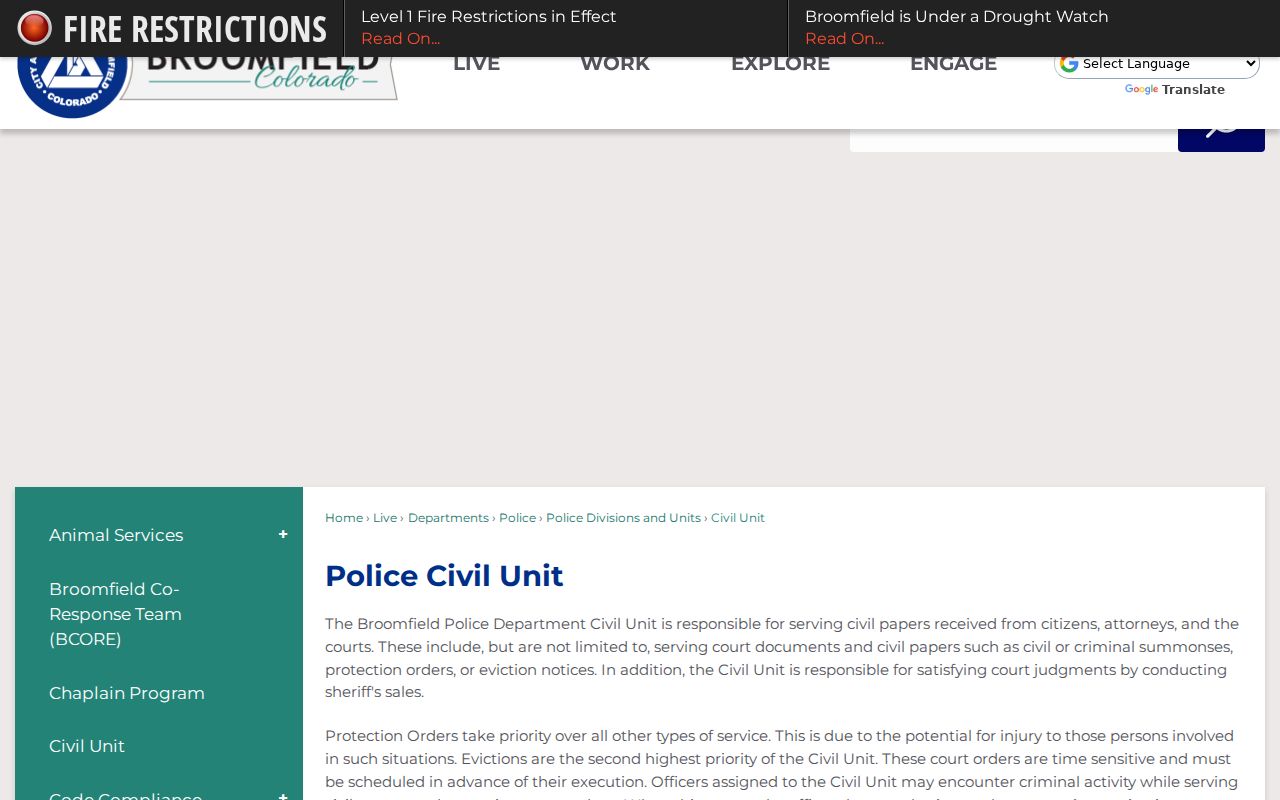
A proof or return of service may land in the civil case file. Questions about that filed entry go to the Combined Courts clerk.
Civil Case Types on the Docket
Broomfield County civil dockets cover money disputes, property claims, small claims, and evictions. District Court also manages domestic relations, probate, mental-health, juvenile, and other general-jurisdiction matters. Remote access varies by case type. Probate, juvenile, and protected filings may demand identification. They may also demand a stronger access basis than an ordinary public civil file.
- Small claims through the published $7,500 limit
- County civil money cases through $25,000
- Eviction cases and their return settings
- District Court general civil and equitable matters
- Domestic relations, probate, and other specialized case types
Case-type codes like C, CV, and S appear on the state document request form. Do not guess from a short code alone. Use the full case number and the court named in the caption.
Broomfield County Civil Filing Numbers
The Colorado Judicial Branch FY2024 report counts 964 civil filings and 907 civil terminations in Broomfield District Court, filings topping terminations by 57. Both are flow counts, not a pending inventory. Treat them as activity, not a backlog measure.
Domestic relations, probate, juvenile, and mental-health filings are counted separately, even though their activity is civil in nature too. Do not add the civil figure to those unlike measures. Name each category and time period instead.
Civil Docket Settings and Hearings
A civil setting entry should list the basics you need. Expect a date, time, the Broomfield courthouse, division, case number, caption, and the type of hearing. Each label means something different. Pretrial conferences deal with readiness and scheduling, and motions hearings take up one specific request. A trial settles the disputed issues themselves. An eviction return, by contrast, is just the first County Court setting in an eviction matter. The 2026 district Webex list names Broomfield eviction returns specifically.
Watch for resets too. A reset changes the next hearing date. The old entry stays in the ROA. So read the events in order and rely on the newest setting or minute order. The current calendar is the best guide for an upcoming appearance. If the date is unclear, call Combined Courts at 303-464-5020. Remember that a Webex listing alone does not authorize remote appearance. The case order and division instructions control that. For a fuller date workflow, see the Broomfield County Court Dates reference.
Broomfield County Civil Judgment Records
Judgment entries mark where a civil case turns enforceable. A default judgment can be entered when a party fails to defend as required. A satisfaction of judgment shows the obligation has been fulfilled. A transcript of judgment is what you use for enforcement or recording. The clerk issues it. Different documents, different stages.
To request copies, use the online state record request, the printable form, email, phone, mail, or the Combined Courts counter. The online form lets you pick an order for judgment, transcript, satisfaction, protection order, ROA, or another document. Published charges run $25 for a transcript of judgment. A certificate of satisfaction costs $20. Each certified or exemplified document costs $20 plus copy fees. You can also ask for pickup or delivery.
Choose the narrow item. A calendar result cannot prove the judgment's text. Name the signed order and its approximate date when requesting a copy.
Broomfield County Civil Request Routes
Judicial case records do not flow through Broomfield's general open-records portal. Civil filings go to the Combined Courts records unit instead. Reach it at BroomfieldRecordsRequest@judicial.state.co.us, 303-464-5020, mail, or in person at 17 Descombes Drive. The clerk posts no public terminal or lobby-only search. So confirm by phone before making a trip. The Broomfield CORA policy spells out the separate process for city administrative records.
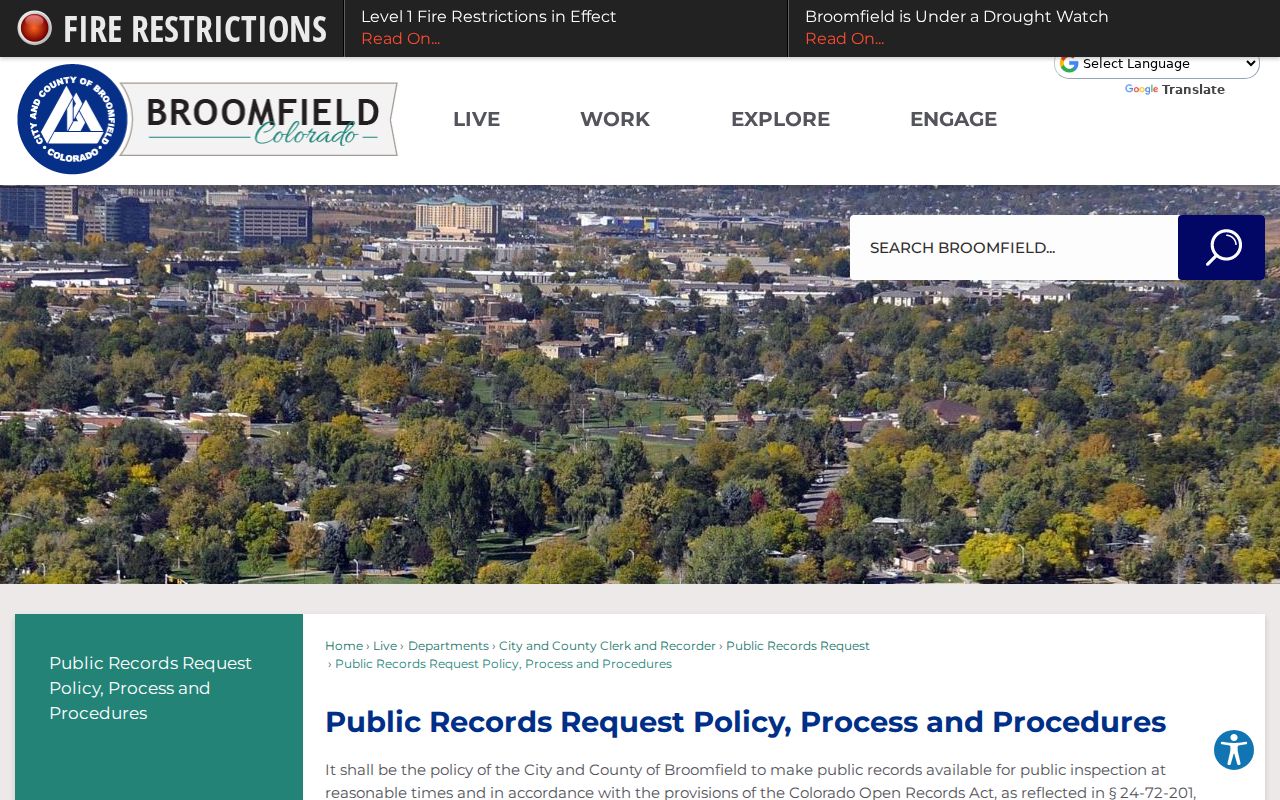
That CORA policy covers city and county administrative records only. It expressly excludes records controlled by the Colorado Criminal Justice Records Act and does not replace the Judicial Branch court-file request. For the administrative side, the Broomfield public-record request entry opens the JustFOIA route.
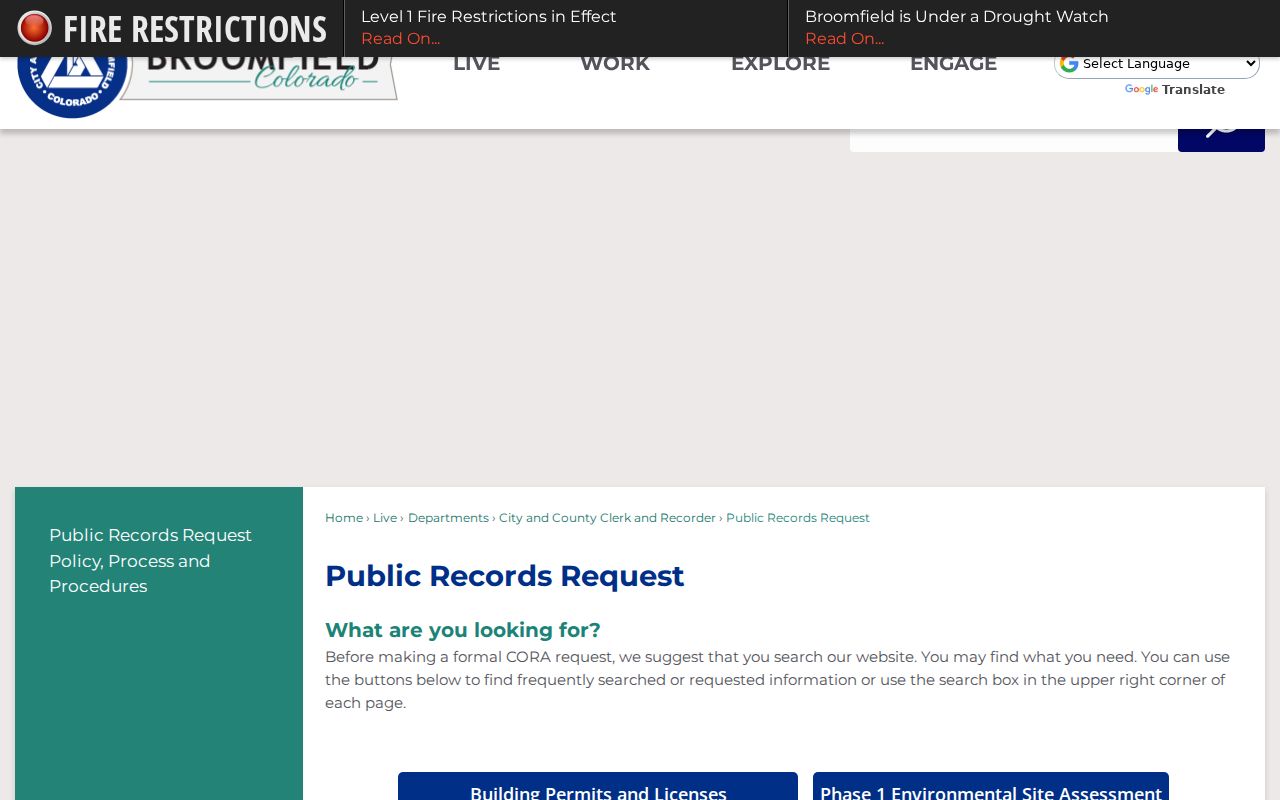
So use the JustFOIA portal only when the material sits with a city or county administrative office. A civil complaint, order, or ROA never belongs there. For genuinely old federal material, the National Archives at Denver is a possible archival fallback, not a source for current Broomfield state civil dockets.
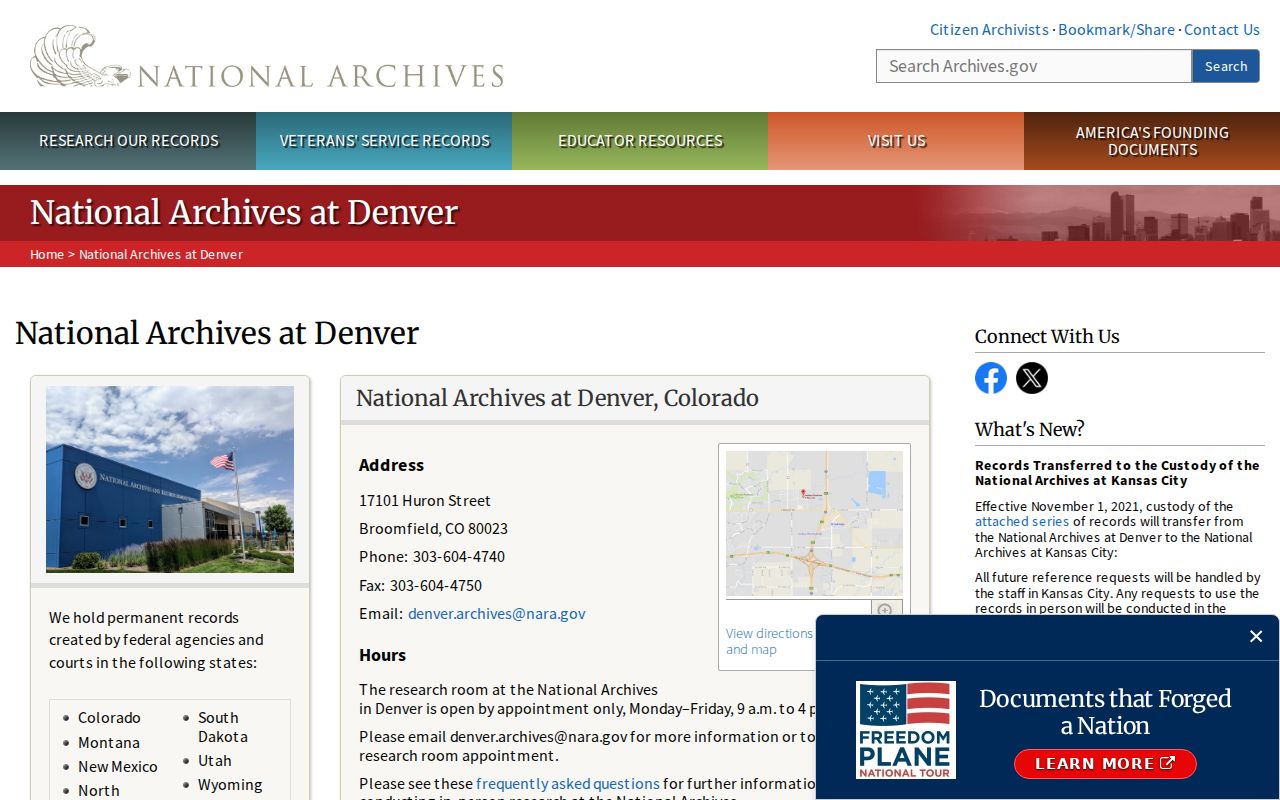
The archive route only fits transferred federal holdings. Current Colorado trial-court filings stay with the Broomfield Combined Courts clerk.
Civil Docket Access Rules
Access to Colorado court records runs under Chief Justice Directive 05-01. That directive sorts records into public, remote, facility-only, excluded, and compiled-data tiers. A Broomfield County civil docket can be public. One filing inside it may hold redacted or protected information. Juvenile, probate, mental-health, and suppressed matters may require identification or court permission. Case-specific orders and statutes also control.
Key access sources:
Chief Justice Directive 05-01 sets the core categories for Colorado court-record access.
Chief Justice Directive 06-01 addresses court-record retrieval, research, redaction, copy, and scanning costs.
Colorado Revised Statutes Title 13 contains civil jurisdiction and court-fee authorities.
For current jurisdiction and fee law, the Colorado Revised Statutes access page is the official starting point.
Always read statutory text alongside the court's current directives and the order in your specific Broomfield civil case. If a civil record is withheld, ask the clerk for the legal basis. Ask too whether a redacted copy, party access, identity verification, or a court order could give you lawful access. The clerk's official copy controls over any vendor index.
Fees can apply to copies and searches. Inspection and the public hearing calendar may still be free. The published state schedule lists electronic copies at $0.25 per page. Printable paper copies run $0.75 per page. Research or redaction costs $30 per hour in 15-minute units after the first hour. Off-site file retrieval is billed at actual cost. A narrow request with a case number, filing title, and approximate date cuts both ambiguity and billable research time.